OSE Homebrew: Simplified Combat Skills
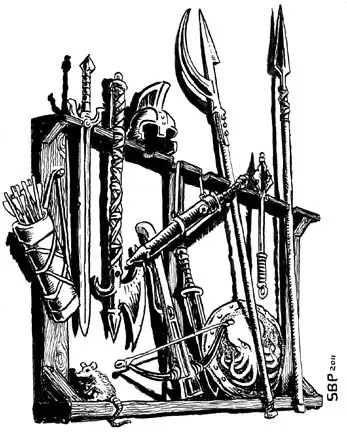
Players love character options and letting players decide what type of weapons they excel at or what combat style they fight in can be fun for those who want some crunch to their character creation.
On pg. 50 of the AD&D 2e Player's Handbook is information on rules for Combat Skill Points. All characters are given Combat Skill Points at 1st level which they can use in exchange for combat skills like Weapon Proficiency, Ambidexterity, and Combat Methods.
Below are some simplified interpretations of these rules for a Old School Essentials, Basic/Expert or prior game.
I would recommend for the Homebrewer to modify the THACO / Hit Bonus tables for the classes, at minimum the Fighter, to compensate for the penalties of both using in-proficient weapons and the non-dominant hand.
Give your Fighters any, but not all of the following:
1. a reduction of THACO or Hit Bonus equal to their level (19 (+0) at 1st, 18 (+1) at 2nd, 17 (+2) at 3rd, and so forth) so that they stand out specifically with being able to use a plethora of weapons without much downside.
2. a Multi-attack at 5th and 10th level of 3 Attacks in 2 Rounds, and finally 2 Attacks in 1 Round. OR the ability to hit multiple targets with just a single attack roll depending on the Hit Dice of the Fighter. For example: a 4th level Fighter may hit 4 1HD enemies surrounding him or her with a single successful attack roll, with the damage die roll result being applied to all of them equally. This also applies to scenarios with 2 2HD enemies, or 1 1HD + 1 3HD enemies (this may enable the Fighter to focus down easier to hit targets first, but maybe that's a feature and not a bug?).
3. Old School Essentials Carcass Crawler Issue #1 features some Combat Talent options for the Fighter. You could give your Fighters 1 Talent at 1st level, then every 3 levels after (1, 4, 7, 10, 14).
Combat Skills
Combat Skill Points
Characters begin with a pool of Combat Skill Points they can allocate to specific combat skills and weapon proficiency. Multi-classed characters use the best row for their particular combination. If the DM allows, the PC's Intelligence bonus (to languages known) may be added to their 1st level total CSP.
| Class | Combat Skill Points | Unskilled Penalty (Same Group*/Unskilled**) |
|---|---|---|
| Dwarf, Fighter or Hobbit | 4+ 1 per 3 levels (3rd, 6th, 9th) | -1/-2 |
| Cleric, Elf or Thief | 2+ 1 per 4 levels (4th, 8th, 12th) | -2/-3 |
| Magic Users | 1+ 1 per 6 levels (6th, 12th, 18th) | -3/-5 |
*If you use a weapon within the same weapon group as another you are skilled in, you have the first penalty.
**If you use a weapon you have no skill in, you use the second penalty.
Ambidexterity
In exchange for 1 CSP, any character can become ambidextrous, but only non-Magic User types may fight with a weapon in each hand.
An ambidextrous character suffers no penalty when using his non-dominant hand for any actions. In combat, this reduces the penalty suffered to attacks with his non-dominant hand by 2 when fighting with two weapons.
Weaponry Skills
Weaponry Skill: In exchange for 1 CSP, a character can become skilled in a singular weapon of their choice.
Weaponry Group: A weaponry group consists of weapons similar in design to one another. In exchange for 2 CSP, a character becomes skilled in all weapons within that group.
| Group | Weapons |
|---|---|
| Axe | Battle Axe, Hand Axe, Pole arm |
| Bow | Short and Long bow |
| Lance | Lance (any) |
| Mace | Club, Mace, War hammer |
| Crossbow | Light/Heavy crossbow |
| Long blade | Bastard sword, Longsword, Two-handed sword |
| Short blade | Dagger, Rapier, Short sword |
| Release action | Catapult, Net, Sling, Whip |
| Spear | Javelin, Spear, Staff, Trident |
Optional Rules
Weapon Specialization
Weapon specialization is obtained by spending extra CSP to a singular type of weapon. To specialize in any sort of melee weapon or crossbow, the character must spend 1 CSP but with any short or long bow must spend 2 CSP.
When a character specializes with a melee weapon, he gains a +1 bonus to all his attack rolls with that weapon and a +2 bonus to all damage rolls (in addition to bonuses for Strength and magic). The attack bonuses are not magical and do not enable the character to affect a creature that can be injured only by magical weapons.
Bow and crossbow specialists gain an additional range category: Point blank Point-blank range for bows is from six feet to 30 feet. Point-blank range for crossbows is from six feet to 60 feet. At point-blank range, the character gains a +2 modifier on attack rolls. Furthermore, if the character has an arrow nocked and drawn, or a bolt loaded and cocked, and has his target in sight, he can fire at the beginning of the round before any initiative rolls are made.
Combat Methods
A character may spend their CSP to gain proficiency in a Combat Method of Melee or Ranged variety. Magic Users however cannot spend their CSP on Melee specific Combat Methods.
Melee Methods
Single Weapon Method
This method is for roguish types who fight with a single weapon in their dominant hand, and no items (except for small things, like potions) in their off hand. A character skilled in this method gains a +1 bonus to their AC. It costs 1 CSP to become skilled, and 1 CSP to become specialized, gaining +1 additional AC.
Heavy Weapon Method
This method is for warrior types who fight with a large two-handed weapon. A character skilled in this method gains a +1 bonus to their weapon damage using two-handed weapons. It costs 1 CSP to become skilled, and 1 CSP to become specialized, gaining +1 additional damage.
Defender Method
This method involves fighting with a shield in one hand and a weapon in the other. A character skilled in this method gains a +1 bonus to their AC and the skill Shield Bash. On a combat round you may attack with both your main-hand weapon and your shield. The shield attack is made with your off-hand, dealing 1d4 damage. On the round you attack with a shield, you lose your AC bonus. It costs 1 CSP to become skilled, and 1 CSP to become specialized, gaining +1 additional AC and your off-hand shield attack penalty is reduced by 2 (or eliminated completely if also Ambidextrous).
Dual Weapon Method
Also popular with rogues and warriors who shun the use of a shield, this method utilizes a one-handed weapon in each hand. This method reduces the penalty to the character's attack with both their dominant and off-hand by 2 (or eliminated completely if also Ambidextrous). It costs 1 CSP to become skilled.
Ranged Methods
Missile Method
Open to all, including Magic Users using the sling, this method involves combat using any missile weapon requiring ammunition as long as the character is specialized in it. Skill in this method gives the character a +1 Hit bonus while not moving when firing and +2 bonus to hit when specifically making a called shot. While the character is mounted they have no penalty to firing their missile weapon while moving. It costs 1 CSP to become skilled in this method.
Hurled Method
Open to all, including Magic Users using daggers or darts, this method involves combat using thrown weapons, as long as the character is skilled in it. Skill in this method gives the character a +1 Hit bonus while not moving when firing and +2 bonus to hit when specifically making a called shot. While the character is mounted they have no penalty to hurling their thrown weapon while moving. It costs 1 CSP to become skilled in this method.